
 C
C
产品详情

Production technology transfer of Nano silica sol series
products
Ⅰ、Silicon sol product technology brief introduction
Project background:
Silica sol, also known as silica sol, or silica sol, is a colloidal
aqueous solution of silica polymolecular polymerization,
molecular formula is SiO2. It is a multipurpose inorganic silicon
material. As a kind of inorganic silicon fine chemical products, it
is used in chemical industry, refractory material, precision
polishing material, precision casting, catalyst, textile, paper
making, fiber industry, coating industry, pharmaceutical
industry, electronics and other industrial fields. With the
development of science and technology and the need of energy
conservation and environmental protection, the use of silica sol
will be more and more wide.
At present, the entire market demand for silica sol is about 4
million tons/year, mainly concentrated in the European Union
and other countries, the domestic market demand is also
gradually expanding, 2018 annual domestic silica sol market
consumption has broken through 500,000 tons/year, there is a
relatively large demand in various industries.
Ⅱ、Production method and product characteristics of silica
sol
Silica sol is one of the important additives in the process of
industrial production in many industries, known as "industrial
MONOsodium glutamate", with a long history of development
and many kinds of subdivision. According to the performance
characteristics, it is divided into acid silica sol and alkaline
silica sol, colloidal size is different, nature, use is not the same.
At present, the main production technology of silica sol has two
kinds: one-step hydrolysis of elemental silicon and ion
exchange method, and the basic raw materials are industrial
silicon powder and industrial sodium silicate.
1. The production process of simple silicon monohydrolysate is
relatively simple and has been widely used in China. The
method uses industrial pure silicon powder as raw material,
under the action of catalyst, through heating directly dissolved
in deionized water medium, and after proper time of heat
preservation, and then filtered and concentrated. The silica sol
produced has less impurities and high purity, and its SiO2
colloidal particles have dense quality and uniform particles,
which are used in investment precision casting process. The
shell has good high temperature characteristics and superior
performance to other types of silica sol products. Production
process waste water discharge is less, environmental pollution
is low, is a kind of environmental protection and relatively
simple production process.
2. Ion exchange method, also known as particle growth method,
the process to industrial sodium silicate (also known as paohua
alkali/sodium silicate) as raw material, through ion exchange,
stability, crystal seed preparation, particle growth reaction,
concentration, purification and other steps to produce silica sol
products. The concentration and ion-exchange resin cleaning
processes in the production process of this method produce a
large amount of wastewater. Equipped with the corresponding
complete set of wastewater treatment equipment for treatment
and reuse, it can basically achieve zero discharge and reduce
environmental pollution. (Our partners produce complete sets
of zero-discharge wastewater equipment).
Silica sol is a colloidal silica particles uniformly dissolved in
water, according to different processing methods, the colloid
appears pale blue, sky blue or milky appearance, its particle
size small, generally between 7-40 nm, dispersion and
permeability is good, the ability of high temperature, mixed with
coating aggregate does not change is the essence of mulch,
hate oily strong.
Silica sol has the following characteristics:
1. Silica sol has a large adsorption: silica sol in the numerous
micelles generated numerous network structure gap, under
appropriate conditions for inorganic and organic matter has a
large adsorption;
2. Silica sol has a large specific surface area:
generally :150-300m2/g;
3. Silica sol has good adhesion: because of its uniform size of
micelle, 10-20m/ U or so, its own drying that produces
appropriate bonding strength, but the strength is small, if the
silica sol is added to some fiber or granular material, and then
drying curing can become a strong gel structure. Greater
cohesiveness will be produced. (generally 46.7kg/cm2);
4 silica sol has good temperature resistance: generally can
withstand high temperature of 1600℃ or so.
5 silica sol has good hydrophilicity and strong oleophobic: can
be diluted with distilled water or deionized pure water to any
concentration, and with the increase of dilution and stability
enhancement; When added to organic matter or a variety of
metal ions, and can produce oily;
6. In addition, silica sol has a high degree of dispersity, good
wear resistance and good light transmittance, so it can be a
good dispersant, preservative, flocculant.
Ⅲ、Analysis of application field and market prospect of
silica sol products
Silica sol has wear-resisting, washable, resistant to climate
change, flame retardant, heat insulation, pollution resistance,
corrosion resistance, and the larger specific surface area
(250-300 ㎡ / g), good electrical insulation, adsorption, used in
petroleum chemical industry the new carrier of catalyst,
sorbent, is coating of silicon steel sheet, waterproof, fire
prevention, environmental protection coating, film coating
waterproof, antifoggant requests, It is also the basic raw
material for the production of solid and colored silica gel. It is
widely used in textile, printing and dyeing, paper making, water
purification, photosensitive materials, refractory fibers,
refractory materials and other fields.
The specific uses are as follows:
1. Silica sol with its excellent cohesiveness, used in thin shell
precision casting industry and aviation materials shell
production process, the shell surface is smooth, strong, high
viscous strength, low peeling residue, good air permeability,
uniform and dense colloidal particles, high crystallization
refinement, high temperature resistance, deformation
resistance. Suitable for precision casting surface and back
layer coating as binder. Using silica sol instead of traditional
sodium silicate or ethyl silicate hydrolysate as binder can
improve casting quality, high dimensional accuracy, good
casting finish, reduce production cost, improve operating
environment, and become a good binder for investment casting.
2. Used as a binder for all kinds of refractory materials, with
strong adhesion, high temperature resistance (1500°C-1600°C),
etc.
3. Used in the coating industry, can make the coating firm, and
can fight dirt and dust, aging resistance, fire and other functions.
It has the advantages of dirt and dust resistance, aging
resistance, water resistance, fire resistance, dirt resistance,
high temperature resistance, film hardness, bright color and
color, do not fade, etc. Can also be applied to acid, alkali, fire
retardant coating and far infrared radiation coating;
4. Used for thin shell precision casting industry: can make shell
shape strength, high casting finish. As a high temperature
resistant coating for the mold, it can make the coating have
better heat resistance, reduce the loss of molten metal to the
mold at high temperature, and help to demoulding. The quality
of its shape is better than that of water glass, and it can reduce
the cost and improve the operating conditions instead of ethyl
silicate.
5. Silica sol has high specific surface area, which can be used
for catalyst manufacturing and catalyst carrier.
6. Used in papermaking industry, as a treatment agent for
photosensitive paper, anti-stick agent for cellophane,
pre-treatment agent for photographic paper, anti-slip agent for
cement bag, other office paper after processing, can improve
the printing effect, make the color more distinct.
7. Used in textile industry: can be used as light spinning sizing
agent, it and oil agent, processing wool, rabbit hair spinnability,
reduce broken, prevent flying, improve the rate of finished
products, increase economic benefits. Used in fabric dyeing,
because of its cohesiveness, can form excellent protective
liquid, increase the adhesion of dyeing and so on;
8. Used as treating agent for silicon steel sheet, dispersing
agent for picture tube and anti-skid agent for floor wax.
9. Applied to catalyst: in the production of catalyst, under
appropriate conditions, as a carrier to accelerate the catalytic
speed, in order to improve production efficiency.
10. Application in petrochemical industry: using silica monomer
as catalyst in the production of aromatic nitrile opens up a new
way to improve the recovery of aromatic nitrile. Silica sol is
used as binder and catalyst in petroleum industry.
11 in precision polishing application: silica nanoparticles in
silica sol is a good abrasive, its particle size, particle shape,
particle size distribution, concentration, pH and impurity
content will directly affect the polishing material surface
removal rate and the balance between surface roughness or
corrugation, and then affect the polishing quality of the material
surface. Silica sol is used for flat polishing of a variety of
materials, such as metal shell of electronic products, mobile
phone camera glass, Home button, computer hard disk, silicon
wafer, sapphire crystal surface and other surface precision
polishing processing.
Because silica sol has so many applications in the industrial
field, customers for various types of silica sol
The demand is relatively large, so ordinary and refined silica sol
products have a relatively large market.
Ⅳ、Technical and economic benefit analysis of silica sol
project industrialization
Take a production line for example, the annual output is 3,000
tons. The cost of ordinary products is 1500-1600 yuan/ton, and
the market price of each ton is 2,300-2600 yuan. The market
price of products with high purity and low sodium is 3500-4000
yuan, and the gross profit of each ton is 800-1000 yuan. Then
the annual net profit is about 2.4 to 2.8 million yuan, if the
marketing channel is smooth, increase the actual output, a line
can produce more than 10 tons of glue every day, according to
the current market situation, if the sales are good, the profit is
higher. Some good quality fine silica sol price will be higher,
profit is also high.
Ⅴ、Industrial production conditions of silica sol project
1, plant equipment: need 300-500 square plant and warehouse,
water and electricity, 380 volt power supply, total power 30-50
kw.
2. Equipment and investment: the daily output of 5 tons reactor
filter, pure water machine and other major equipment investment of about 100,000 yuan (increase the output
appropriately increase investment); Working capital refers to
market sales volume; Production workers: one needs 2-3
people,
can produce 5-10 tons of silica sol, workers' education level is
not high;
Ⅵ、Environmental assessment and analysis of silica sol
project
The raw materials used in the production of silica sol are
commonly used chemical raw materials. There is no exhaust
gas and waste residue discharge in the production process. The
waste water generated in the production process is treated and
discharged to the standard, which will not cause pollution to the
environment. If equipped with the corresponding complete set
of wastewater treatment equipment for treatment and reuse,
can basically achieve zero discharge, so as to reduce
environmental pollution.
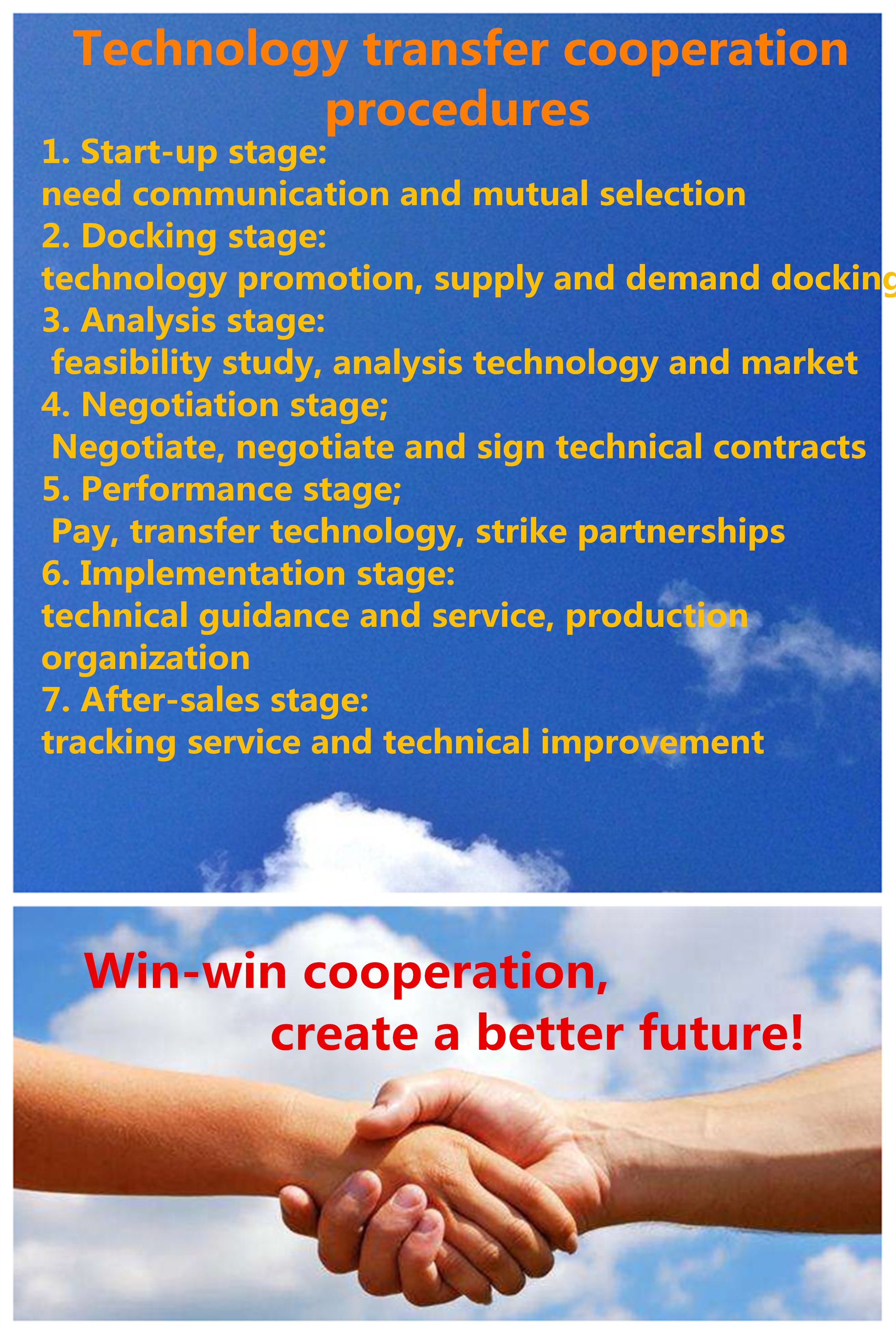
Ⅶ、Technology transfer products, procedures and ways of
cooperation
Silica sol series products available for transfer:
1, silica powder method common alkaline silica sol;
2, resin method common alkaline silica sol;
3, fast drying silica sol;
4, high purity, low sodium and large particle size silica sol;
5, high purity and low sodium silica sol;
6, neutral silica sol
We began from the 1990s silicon sol production research and
development and promotion, after years of exploration, improvement, summed up a set of mature silicon sol production
technology, and at any time to upgrade the technology and
product serialization, to ensure that the technology is in a
priority position. The daily output of a single set of equipment
can reach 8-10 tons, and the production cost is greatly reduced.
Many manufacturers have been successfully transferred, and
the production of the transferee is normal and the benefits are
good. Accumulated years of rich production experience, if you
need, we will serve you wholeheartedly.
Technology transfer process:
1. One-time technology transfer and signing of technology
transfer contract;
2, to provide a full set of production equipment process flow
chart, equipment installation drawing, equipment list and raw
material manufacturers, construction specifications,
production technology, production equipment and raw material
procurement list, and assist production equipment
manufacturing and installation, provide corresponding
technical services;
2. Provide detailed production technology and formula, be
responsible for the training of production operation technology
and guide production workers in trial production until qualified
products are produced. Engineers can be sent to provide on-site
technical services to guide the production of qualified products.
Detailed project feasibility analysis report on request.
Product technology for large-scale production of
mature technology, technology transfer fee call to
discuss.

Basic silica sol

Alkaline silica sol with small particle size

Acidic silica sol with large particle size



 Copy product links
 Long by picture save/share
Top

 TM
TM
Foshan Kequan Technology Co., Ltd.
ADD:Shi Shan Zhen Luo Cun , Nanhai District, Foshan City,
Guangdong Province,China.
E-MAIL:kequan@aliyun.com
317613051@qq.com
WEB:www.kequan.info
Mobeile:008619867468323

Mobile Website

Customer service WeChat
Copyright©Foshan Kequan Technology Co., Ltd.(2021-2026)
 TM,is the trademark of Kequan

点击右上角
分享给朋友吧
